How the First Law of Thermodynamics Showed Up at My Writing Workshop
The first law of thermodynamics states “…that energy cannot be created or destroyed, only transferred or converted from one form to another. In other words, the total amount of energy in a system remains constant, even as that energy is transferred or converted.”
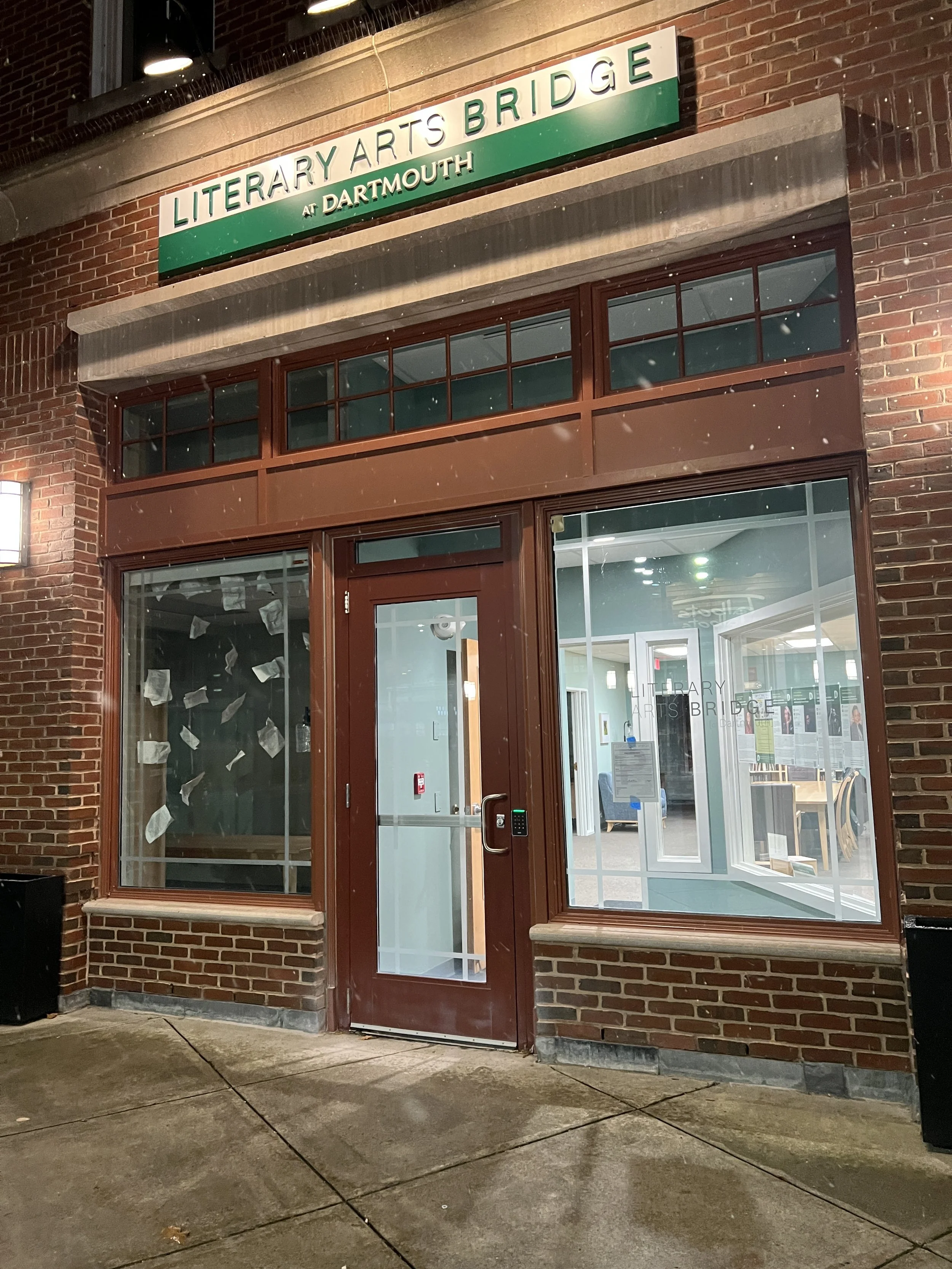
I’ve deployed this reminder to writing students before and it came up again as I was facilitating a writing and improv workshop for Dartmouth students at the Literary Bridge.
During our debrief, one student said something like, “This is fun, but this isn’t real. The real writing happens later, when I’m focused and concentrating.” I offered her a challenge, bringing up that first law: Matter isn’t destroyed. Nothing you write or imagine is ever wasted. Even what you think of as messy, silly, or unimportant scribbles—it’s all energy, and it all remains constant.
I love reminding students of this because it applies just as much to creativity as it does to physics.
In the workshop, I used one of the core rules of improv comedy, “Yes, And,” along with improv exercises to teach about keeping ideas moving. Saying “yes, and” to your own ideas quiets the inner critic. It keeps creative energy circulating instead of letting it die under the weight of judgment. It’s easy to shut yourself down mid-thought with self-talk like: That doesn’t make sense. That’s not good enough. Someone else has done this better already.
But when you keep saying “yes, and” to your ideas, practicing mindfulness and openness, you keep energy in motion and build creative momentum.
Back to physics: when energy meets resistance, some of it turns into heat; a rise in entropy. If you resist your own ideas, you don’t lose that creative matter; it just becomes more diffuse, less focused. Resistance shows up as perfectionism, fear of failure, or comparison. Believing that “my writing conditions have to be serious, perfect, important” blocks potential flow and spreads energy thin.
Improv lowers that entropy. It helps you gather dispersed energy, convert noise into momentum, and keep the creative system alive and dynamic. Improv invites you to experiment, to play, to make a mess—because the mess is matter, it’s energy, and once created, it isn’t lost. (Remember: Law number one.) It’s all part of the process.
If you can trust that everything you generate has value—and that nothing is ever lost, it just changes form—you can stay open to creative flow. Because truly, everything counts.
How to put this into practice today?
Try one of these writing exercises to move energy and honor your ideas:
Free-Flow Scribble: Set a timer for 10 minutes and write without stopping or censoring yourself. No editing, no judgment—just energy in motion. (Writing Down the Bones from Natalie Goldberg is a great guide to free writing.)
Yes, And Story: Start a story with one sentence. Then, for the next five sentences, respond only with “yes, and…” adding whatever arises. Build momentum without shutting yourself down.
Energy Conversion Exercise: Take an old, discarded idea, something you once abandoned, and rework it in a new form. Turn it into a poem, a letter, or even a dialogue. See how energy transforms rather than disappears.